
How to Import Landscape Plants from Türkiye: A Buyer's Guide
A step-by-step guide for contractors and importers buying landscape plants from Turkish nurseries: sourcing, specifications, pricing, documents, payment and shipping.
Türkiye is one of the largest producers of ornamental and landscape plants between Europe and Asia. Nurseries in the Aegean and Mediterranean regions grow conifers, palms, olives, topiary and flowering shrubs at export scale, and the country sits within truck distance of the Caucasus, Iraq and the Balkans. For many buyers in the Gulf, Central Asia and Eastern Europe, Turkish stock is the closest large source of quality plants.
This guide walks through how an import from Türkiye works in practice, from the first plant list to the truck arriving on site.
Why buyers source plants from Türkiye
- Climate fit. Plants grown in the Aegean summer are used to heat and dry air, which helps them establish in Gulf and Central Asian projects.
- Range. One growing region can supply Mediterranean species (olive, laurel, oleander) alongside hardy conifers (Thuja, Leylandii, Arizona cypress).
- Distance. Georgia, Azerbaijan and Iraq are short road journeys, and the Gulf is reachable by road or sea. Shorter transit means less stress on live plants.
- Price. Production costs are generally lower than in Western Europe, while many nurseries now grow to the same specification standards.
Step 1: Write a clear specification
Most disputes in the plant trade start with a vague specification. For every line, define:
- Botanical name and cultivar, for example × Cuprocyparis leylandii 'Gold Rider', not just "Leylandii".
- Height as a range in centimetres (80–100 cm), measured from the top of the container.
- Supply form: container-grown or root-balled, with a container range if it matters to you.
- Girth for trees, in centimetres measured 1 m above ground (12–14 cm, 16–18 cm).
- Form: standard, multi-stem, bush, spiral, ball, cone.
- Quantity and the delivery window you need.
Step 2: Source across specialist nurseries
Turkish nurseries tend to specialise. The grower with the best Leylandii rarely has export-grade Washingtonia palms, and the olive farm does not stock topiary. A typical landscape project therefore needs plants from several nurseries. You can contact each one yourself, or work through a coordinator who builds the order across growers and returns one consolidated offer.
Step 3: Understand the quote
Plant prices may be quoted EXW, FCA or FOB, depending on the shipment mode and agreed delivery point. Check that each line in the quote repeats your exact specification, and ask what happens if a size is not available: will it be substituted, and who approves that?
| Incoterm | Seller covers | You cover |
|---|---|---|
| EXW / FCA | Plants ready or loaded at the nursery | Freight, insurance, import clearance |
| FOB | Delivery on board at the Turkish port, export clearance | Sea freight, insurance, import clearance |
| CFR / CIF | Freight to your port (plus insurance for CIF) | Import clearance and inland delivery |
Step 4: Documents and plant health
Every consignment of live plants needs a phytosanitary certificate issued by Türkiye's Ministry of Agriculture and Forestry after inspection. You will also receive a commercial invoice, packing list and certificate of origin. Many importing countries also require an import permit issued before shipment, so check with your national plant protection organisation early. Our guide to phytosanitary certificates covers this in detail.
Step 5: Payment
For a first order, use a payment method that ties money to documents: a letter of credit or a documented advance released against inspection photos and shipping documents. Avoid paying 100% upfront to a nursery you have not visited.
Step 6: Inspection, loading and transit
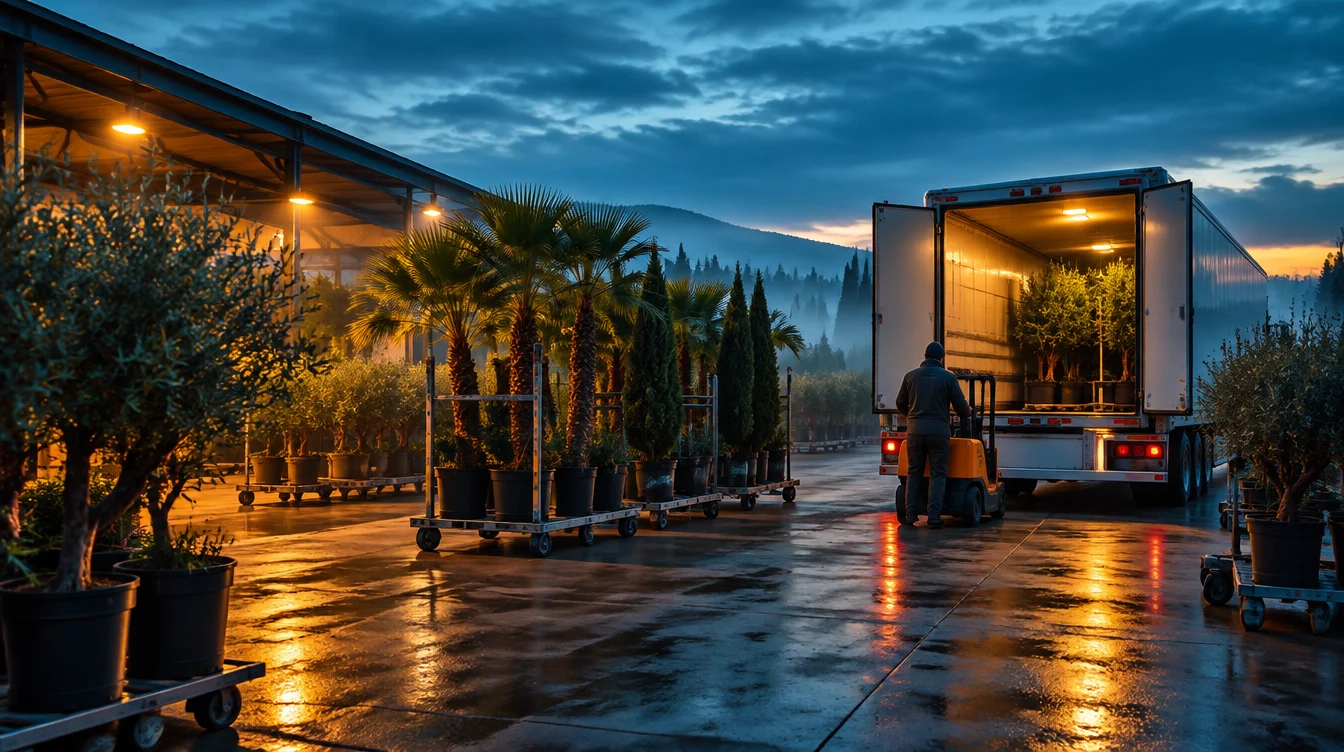
Ask for dated photos and video of your plants, tagged, before they are loaded. Live plants travel in refrigerated trucks or reefer containers, with the temperature set for the species. Dormant conifers travel cool; tropical plants need it warmer. Once the truck leaves, plan for import clearance and have planting crews ready, because plants recover best when they go into the ground quickly. Our guide to consolidated shipments explains how one load is built from several nurseries.
Quick checklist
- Botanical names, sizes and quantities written per line
- Import permit and plant health requirements confirmed in your country
- Quote with Incoterm, validity and substitution rules
- Payment tied to documents
- Pre-loading photos and video of the actual plants
- Phytosanitary certificate and full document set sent to your broker before arrival
Planning an order from Türkiye?
Send your plant list with sizes and quantities. We match each line to a verified nursery and return one consolidated offer, priced under agreed Incoterms.