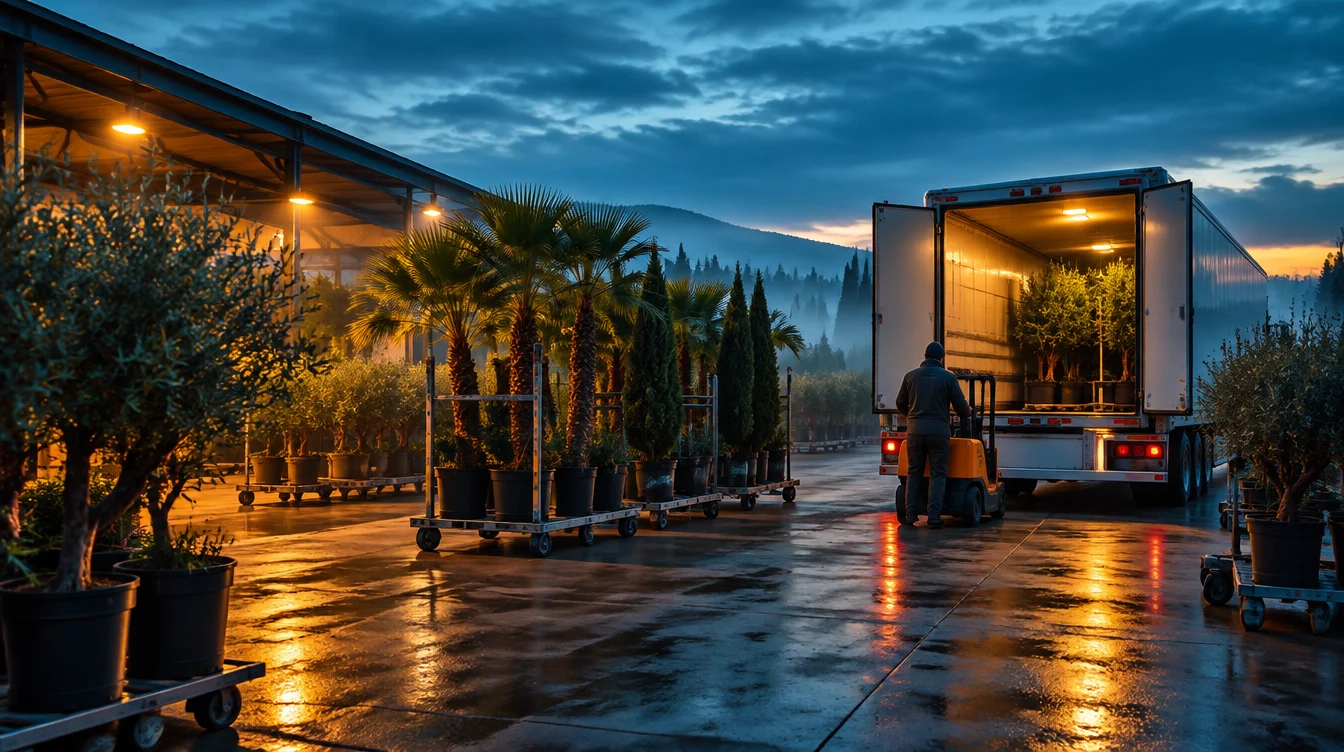
Importing palm trees from Türkiye to Iraq
Which palms suit Baghdad, Basra and the Kurdistan Region, how they are specified, and which documents an Iraqi buyer should line up before a load leaves Türkiye.
Why buyers in Iraq look to Türkiye for palms
Iraq has a long tradition of date palms, but landscape projects need more than date palms: tall Washingtonia for avenues, Canary Island palms for roundabouts and hotel entrances, and cold-tolerant fan palms for the north. Nurseries on Türkiye’s Mediterranean coast grow these in containers and in volume, and the border is close, which makes Türkiye a practical source for contractors, municipalities and developers in Iraq.
Which palms suit which part of Iraq
| Region | Climate | Palms that usually suit |
|---|---|---|
| Baghdad, Basra and the south | Very hot, dry summers; mild winters | Washingtonia robusta and W. filifera, Phoenix canariensis, Phoenix dactylifera |
| Erbil, Duhok, Sulaymaniyah (Kurdistan Region) | Hot summers; cold winters with frost | Trachycarpus fortunei, Chamaerops humilis, and Washingtonia filifera on protected sites |
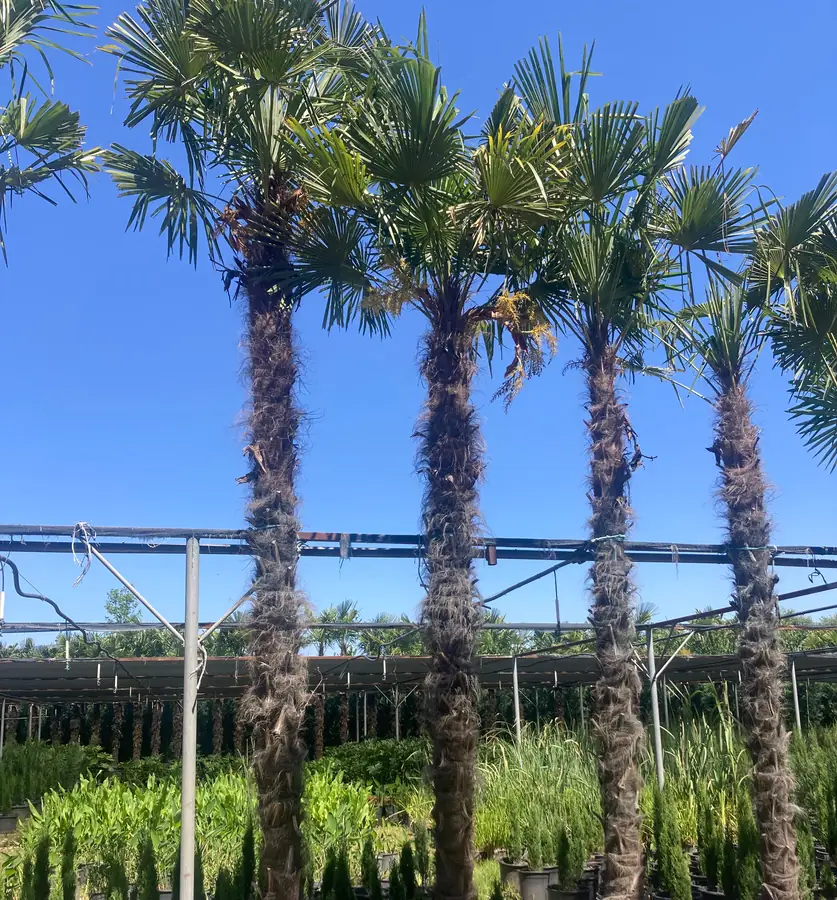
Washingtonia is the usual choice where height is needed quickly along a road. Phoenix canariensis makes a heavier, statement specimen. In the Kurdistan Region, where winters regularly bring frost, Trachycarpus is the safer palm; Chamaerops works well for low, clustered planting.
How palms are specified
Tall palms are sold by clear trunk height, measured from the soil to the base of the leaves, and quoted as a range, for example 2–3 m clear trunk. Smaller and clustering palms are specified by overall height or container size. For avenues it pays to ask for a narrow height band so the planted line looks even; we split large quantities across growers against one specification for this reason.
Documents and the import permit
Every consignment travels with a phytosanitary certificate issued by Türkiye’s Ministry of Agriculture and Forestry, together with the commercial invoice, packing list, certificate of origin and transport documents. On the Iraqi side, live plants need an import permit from the Ministry of Agriculture, arranged by the importer before shipment.
The permit sets the conditions for the consignment, and these are worth reading closely. Iraqi permits for live plants have, for example, asked for consignments free of soil, and for some plants bare-rooted material, which changes how palms have to be prepared. Palms are also hosts of the red palm weevil, which is present in the region, so inspection on arrival focuses on it. Send us the permit conditions before we quote and we check them with the exporting grower.
Route and season
Most loads for Iraq travel by road. Consignments for the Kurdistan Region usually cross at Habur–Ibrahim Khalil; loads for Baghdad and the south continue overland from there. The route and the Incoterm decide who arranges each leg, and we agree both before the quote is final.
Palms move best outside the hottest weeks of summer. Spring and autumn are the usual planting windows, and large orders are easier to fill when they are planned a season ahead, while growers still hold the sizes you need.
How an order works
Send the species, clear-trunk ranges, quantities and delivery city. We match each line to grower stock, return one consolidated offer under agreed Incoterms, and run the pre-shipment checks agreed for your order, with photos or video of the selected palms. Palms can travel with olives, conifers and shrubs in the same load where the permit allows it.
From the nurseries
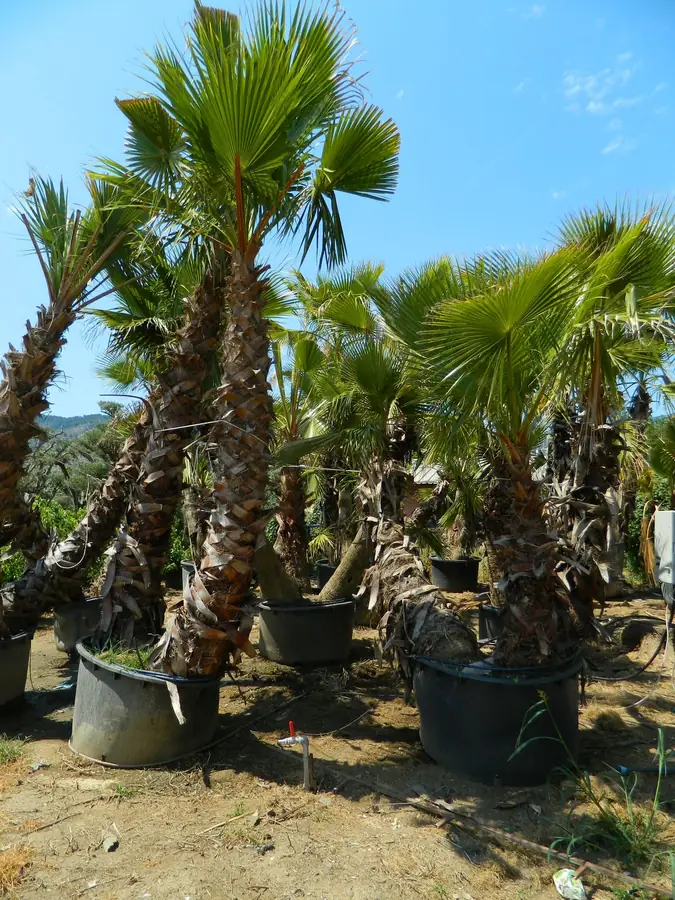
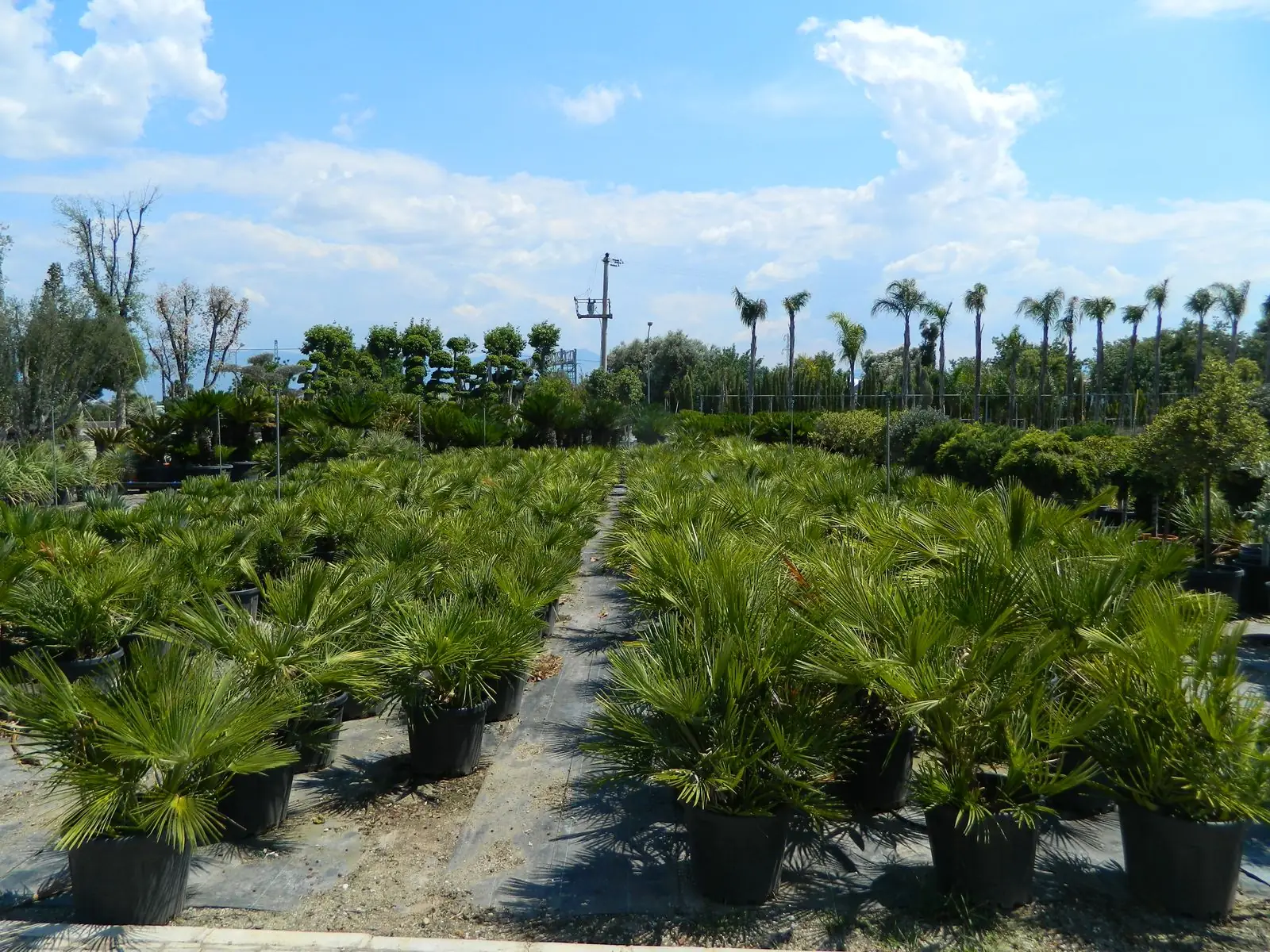
Photos from partner nurseries in Türkiye. Available sizes and quantities change through the season; we confirm current stock with photos before you order.
Frequently asked questions
Do I need an import permit to bring palms into Iraq?
Yes. Live plants need an import permit from Iraq’s Ministry of Agriculture, arranged by the importer before the load leaves Türkiye. Its conditions decide how the palms must be prepared.
Which palm is best for the Kurdistan Region?
Trachycarpus fortunei is the usual choice because it tolerates frost, followed by Chamaerops humilis. Washingtonia filifera can work on sheltered sites.
How are tall palms measured?
By clear trunk height, from the soil to the base of the leaves, quoted as a range such as 2–3 m.
Can palms be shipped together with other plants to Iraq?
Yes, where the import permit covers them. We consolidate palms with olives, conifers and shrubs from other nurseries into one load.
Request a quote for palm trees for Iraq
Send your list with sizes and quantities. We match each line to a known nursery and return one consolidated offer, priced under agreed Incoterms.